
The 7th Digital Humanities Utah Symposium (DHU7) was held on February 24 & 25, 2023, at Southern Utah University (Cedar City, UT).
DHU welcomes humanities scholars from across the Intermountain West and beyond. We especially invite early career scholars, graduate students, newcomers to the digital humanities (DH), and members of traditionally underrepresented groups to join us.
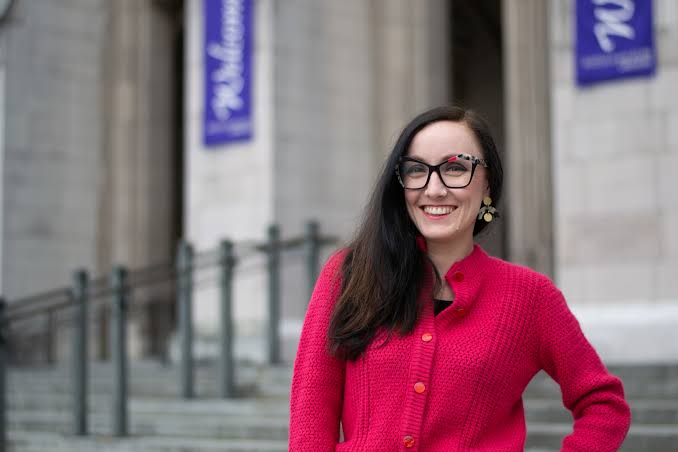
DHU 7 Keynote: “Going Viral: Mobilizing AIDS Archives in Digital Cultures”
Marika Cifor, University of Washington
A vital supplement to scholarship on North American AIDS activism during the 1980s and 1990s, Marika Cifor’s Viral Cultures: Activist Archiving in the Age of AIDS (University of Minnesota, 2022) is the first book to critically examine the archives that keep the history and work of AIDS activisms alive. AIDS archives hold a powerful, if underacknowledged, significance in contemporary viral media cultures. In this talk, Cifor examines how by digitally remediating and transmitting viral imagery, aesthetic practices, and political actions from AIDS archives online through vital nostalgia practices contemporary artists are reckoning with the AIDS past. The artists use AIDS records as catalysts in art-activist mobilizations of virality that navigate the tensions between a longing to understand AIDS activist histories and the urgency of generating action to challenge the injustices that undergird current crises. This work demonstrates the power of a vital nostalgia approach: activist longings for a past time and a way of accessing and using AIDS archives that identifies, addresses, and repairs structural power inequities. Positioning vital nostalgia as both a critical faculty and a generative practice, Cifor examines the act of saving this activist past and reanimating it in the digital age.
Marika Cifor is Associate Professor in the Information School and adjunct faculty in Gender, Women & Sexuality Studies at the University of Washington. She is a feminist scholar of archival studies and digital studies. Her qualitative research investigates how individuals and communities marginalized by gender, sexuality, race and ethnicity, disability, and/or HIV-status are represented and how they document and represent themselves through archives, data, and digital technologies. Her work is motivated by questions such as, what does a society’s conceptualization of and relationship to the past say about its present, and how does this shape possible futures? How are archives, data, and digital technologies implicated in the precaritization of minoritized people? And how do marginalized people document and represent their lives, identities, and social movements as a means of advancing more just and equitable worlds?